
The Evolution of Timber Joinery
There is something different about timber joinery compared to most modern building materials. It carries history with it. Long before aluminium systems, thermally broken frames, and mass-produced fittings became standard, timber joinery was the benchmark for craftsmanship in residential construction. Villas, bungalows, lodges, and early architectural homes across New Zealand were built around it. Not simply because it looked good, but because it worked.
What has changed over time is not the importance of joinery, but the expectations placed on it.
Early timber joinery was built almost entirely by hand. Frames were heavier, details were simpler, and durability relied heavily on timber selection and craftsmanship. Native timbers like rimu and kauri performed exceptionally well, largely because of their density and natural stability. Many of those windows and doors are still standing today, which says a lot about the quality of both the material and the workmanship behind them.
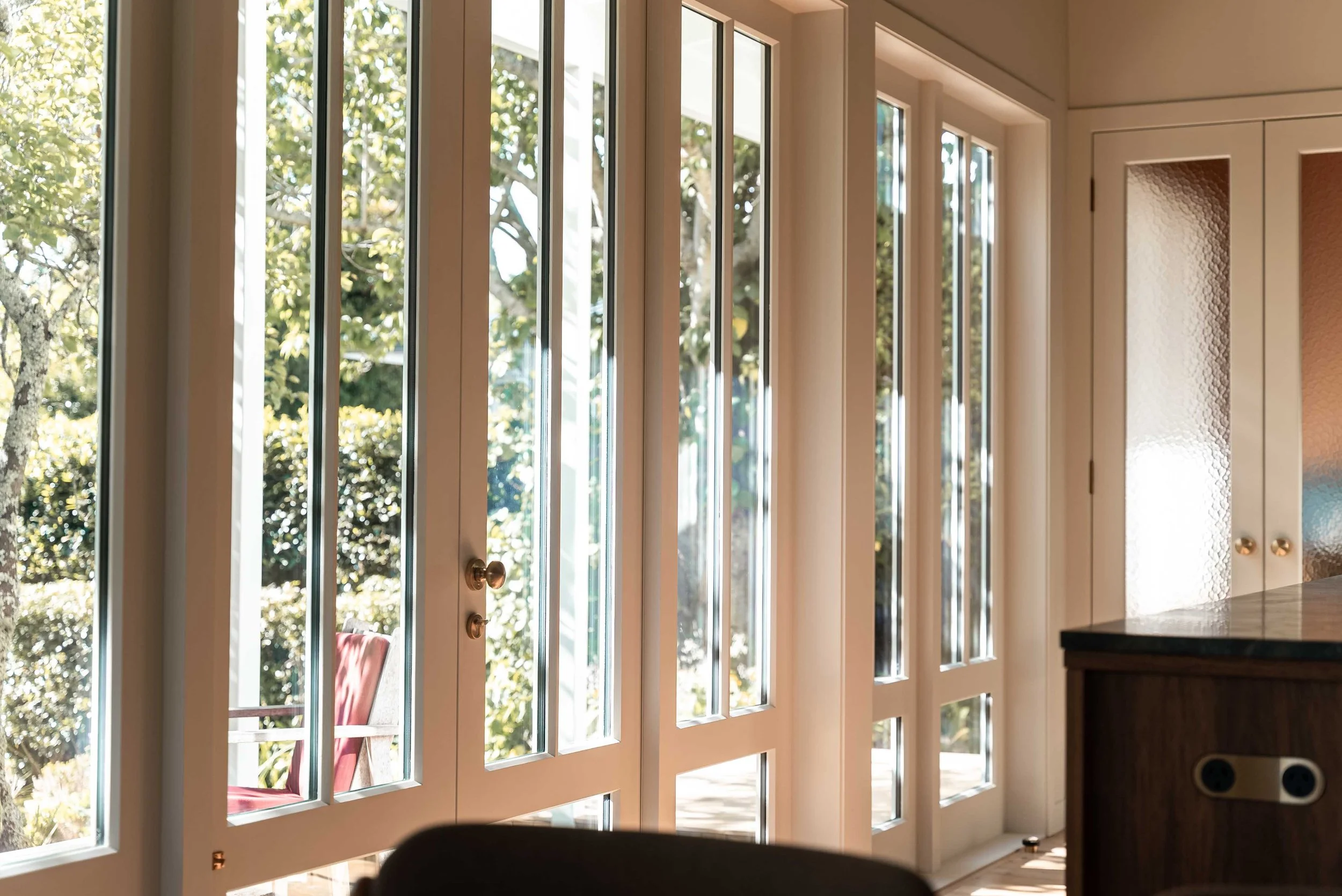
As architecture evolved, joinery had to evolve with it. Homes became larger, openings became wider, and performance requirements became more demanding. Clients no longer just wanted timber joinery that looked good. They expected thermal efficiency, acoustic performance, tighter seals, smoother operation, and longer-term durability in changing climates.
That shift changed the role of the joiner entirely.
Modern timber joinery sits somewhere between traditional craftsmanship and precision engineering. While the materials still carry warmth and character, the production process now involves advanced machinery, moisture control, engineered timbers, specialised coatings, and performance testing. Tolerances are tighter. Finishes are more refined. Hardware systems are significantly more advanced.
What has not changed is the level of detail required to do it properly.
High-end timber joinery still depends heavily on experience. Timber is a living material. It expands, contracts, reacts to moisture, and behaves differently depending on species, grain direction, exposure, and installation conditions. Understanding that behaviour is what separates quality joinery from joinery that creates problems years later.

One of the biggest shifts in recent years has been the move toward combining traditional aesthetics with modern performance standards. Many homeowners still want the warmth and texture that only real timber can provide, particularly in architectural homes, heritage restorations, and premium residential projects. At the same time, they expect the comfort levels of a modern build. That has driven innovation in glazing systems, seals, drainage design, and timber treatment methods.
The result is that modern timber joinery is no longer purely decorative. It has become a technical component of the building envelope.
This is especially important in New Zealand conditions, where joinery is exposed to high UV levels, coastal air, moisture variation, and significant seasonal temperature changes. Poorly built or poorly installed joinery does not simply affect appearance. It can affect energy efficiency, comfort, weather tightness, and the long-term durability of the home itself.
There is also a growing appreciation again for materials that age properly. In a market saturated with synthetic finishes and disposable products, timber offers something different. When maintained correctly, it develops character over time rather than simply deteriorating. Scratches, grain variation, and natural movement become part of the material rather than defects to hide.
That is part of why timber joinery continues to hold its place in architectural construction despite the rise of alternative systems.
The evolution of timber joinery has never really been about replacing tradition. It has been about refining it. Better machinery, improved engineering, and modern performance standards have elevated what timber joinery can achieve, while the core principles remain largely unchanged, precision, material understanding, and craftsmanship.
Good timber joinery still comes down to the same thing it always has. Attention to detail.
Invest in Quality That Matures With Your Home
Ready to upgrade your home with joinery designed for the New Zealand climate? At Next Level Joinery, we craft timber windows and doors that combine timeless aesthetics with enduring performance. Contact our team today to discuss your project or request a consultation.
FAQs
-
When manufactured to a high standard and given regular maintenance, timber windows and doors can easily last 50 to 80 years, often outperforming aluminium frames which can become brittle or corrode over time. Unlike uPVC windows which have a fixed lifecycle, timber is a structural material that can be repaired and refreshed, making it a far more cost effective choice for the total life of your home.
-
Timber is incredibly resilient against the variable weather conditions found in NZ, from high UV levels to heavy rainfall. Because timber does not expand and contract as drastically as metal or plastic, it maintains its structural integrity. While aluminium windows can suffer from surface pitting in coastal areas, timber remains unaffected by salt air, provided it is protected with a quality finish.
-
The idea that timber is high maintenance is a common misconception. While aluminium is often marketed as minimal maintenance, it cannot be easily repaired once the powder coating fails. Timber requires a simple periodic recoat, which is a small trade-off for its superior thermal performance and the ability to update the look of your home without a full window replacement.
-
While we specialise in new high performance double glazed timber windows, it is possible to retrofit double glazing into many existing timber frames. This significantly improves your home’s energy saving capabilities and reduces energy bills by eliminating the cold bridge effect often found in standard aluminium frames that lack a thermal break.
-
For coastal builds, timber is an elite choice because it is naturally resistant to salt corrosion. As building requirements become more stringent due to environmental factors, choosing high quality timber ensures your home remains durable and compliant. The pros and cons weigh heavily in timber's favour when you consider that it can be maintained and renewed even in the most demanding salt-spray environments.
-
Timber has an inherent cellular structure that traps heat, providing a natural thermal break that metal cannot match. This leads to a massive leap in thermal performance, keeping your home at a consistent temperature and significantly lowering the cost of heating and cooling compared to traditional aluminium windows.
